Retail mode



ROLE
Razorfish · Associate
Design Director
SCOPE
UX · UI · Product
Art Direction · Strategy
TIMELINE
3 months
San Francisco, CA
OUTCOME
Globally Deployed
Samsung APK

THE BRIEF
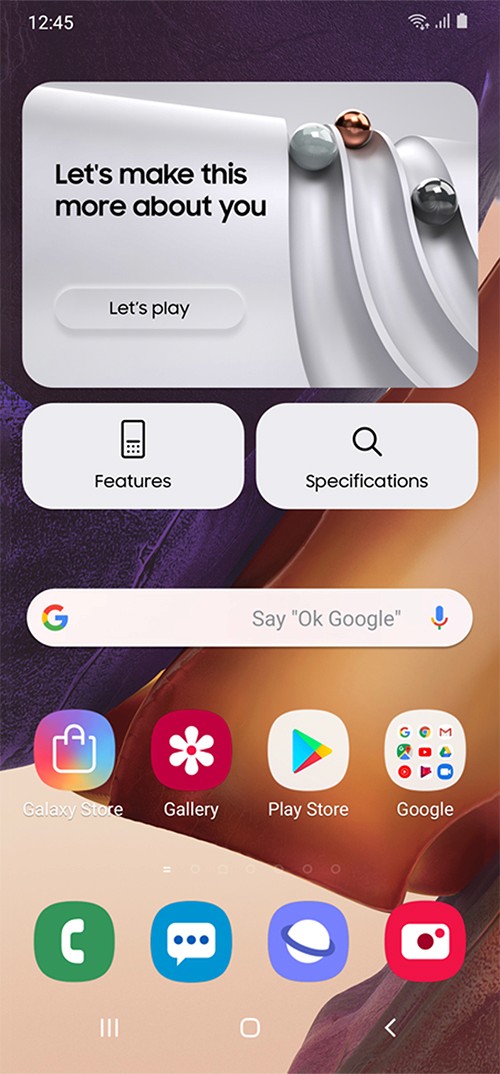
Samsung came to Razorfish with a familiar brief and an honest admission: the retail mode experiences we'd built together over the years were starting to feel cookie cutter. Each generation followed the same template where we shoot lifestyle content, build a menu and feature showcase, deploy it on the demo device. Rinse and repeat.
The brief for the Galaxy Note 10 was to break that pattern. In a crowded retail environment where customers spend seconds deciding whether to engage, a generic product tour wasn't enough. We needed something that pulled people in, held their attention, and made them feel like the experience was built for them.
The strategic insight was simple, personalization creates investment. If a user sees themselves in the experience, they stay longer, explore deeper, and leave with a stronger connection to the device.

The Problem
In retail environments, potential customers interact with demo phones that often lack a personalized way to explore the device’s capabilities. Traditional product tours can feel generic and forgettable, we’ve made plenty of those ourselves. For this project, we needed a way to draw users in quickly, highlight key features, and create a personalized experience that holds attention in a busy retail setting.
The Process
In order to deliver a personalized experience, we first needed to learn about our user. We developed a 6-question A/B quiz that maps users across two key behavioral axes: Analytical vs. Creative and Introverted vs. Extroverted. Each axis is tested with 3 key questions, and responses are tallied to determine a dominant trait per axis. This lightweight, engaging format was designed to feel more like play than survey, pulling users deeper into the experience while collecting meaningful input.
The Solution
The combination of axis results places users into one of four clear quadrants, each representing a distinct archetype. These archetypes unlock targeted recommendations and highlight product features curated to user preferences. The experience is designed to be playful and offers users the opportunity to explore any archetype they identify with, not just the one they scored. It’s fast, engaging, and easy to implement, making it a perfect fit for a personalized retail product tour.
APPROACH
We began with a competitive audit of retail software by the other leading device manufacturers, examining how brands like Apple & Google guide users through their in store demos. We also reviewed previous generations of our own retail experiences to identify what worked, what didn’t, and where we could innovate.
We combined in person usability sessions with remote testing via Maze to capture user behaviors across different environments.
This allowed us to observe how both tech savvy users and casual shoppers engaged with the experience. Maze provided valuable data around click patterns and drop off points, while in-person testing gave us richer context and direct feedback for clarity, speed, and flexibility at retail scale.
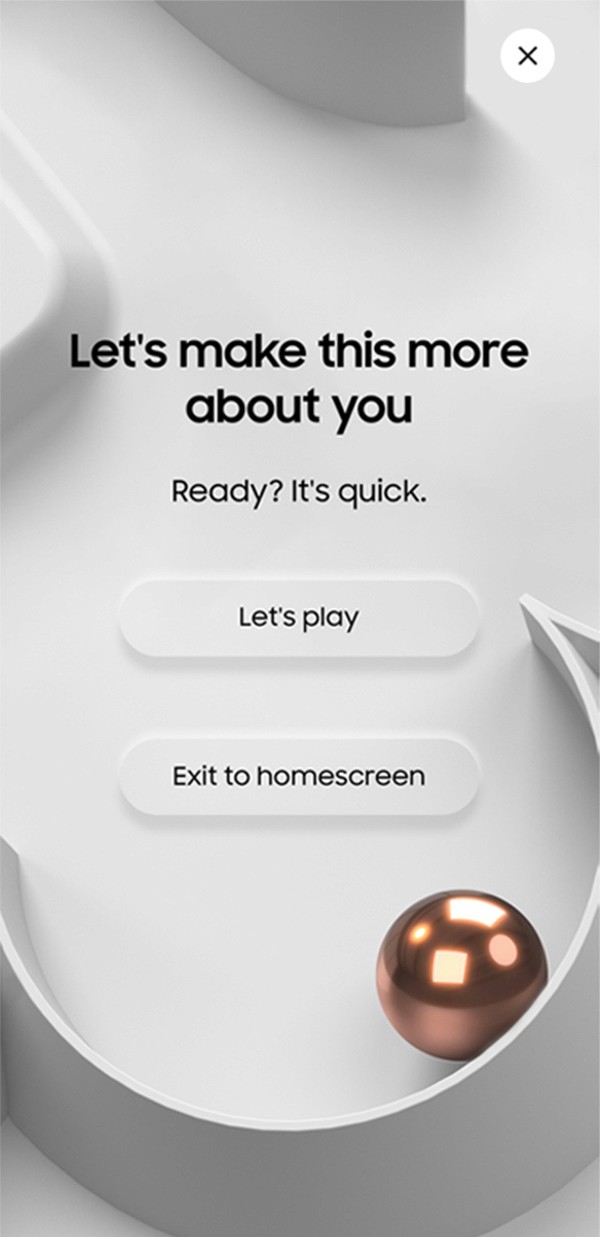
Some users preferred to explore the native device software on their own. The solve for this was as simple as providing an 'exit to native' button on every screen which gave users the freedom to chart their own experience without forcing a path or outcome.
These insights shaped the clear strategic path to create a more human centered experience that not only informs, but also connects with real users how they desired it most. Their own personality.
THE QUIZ
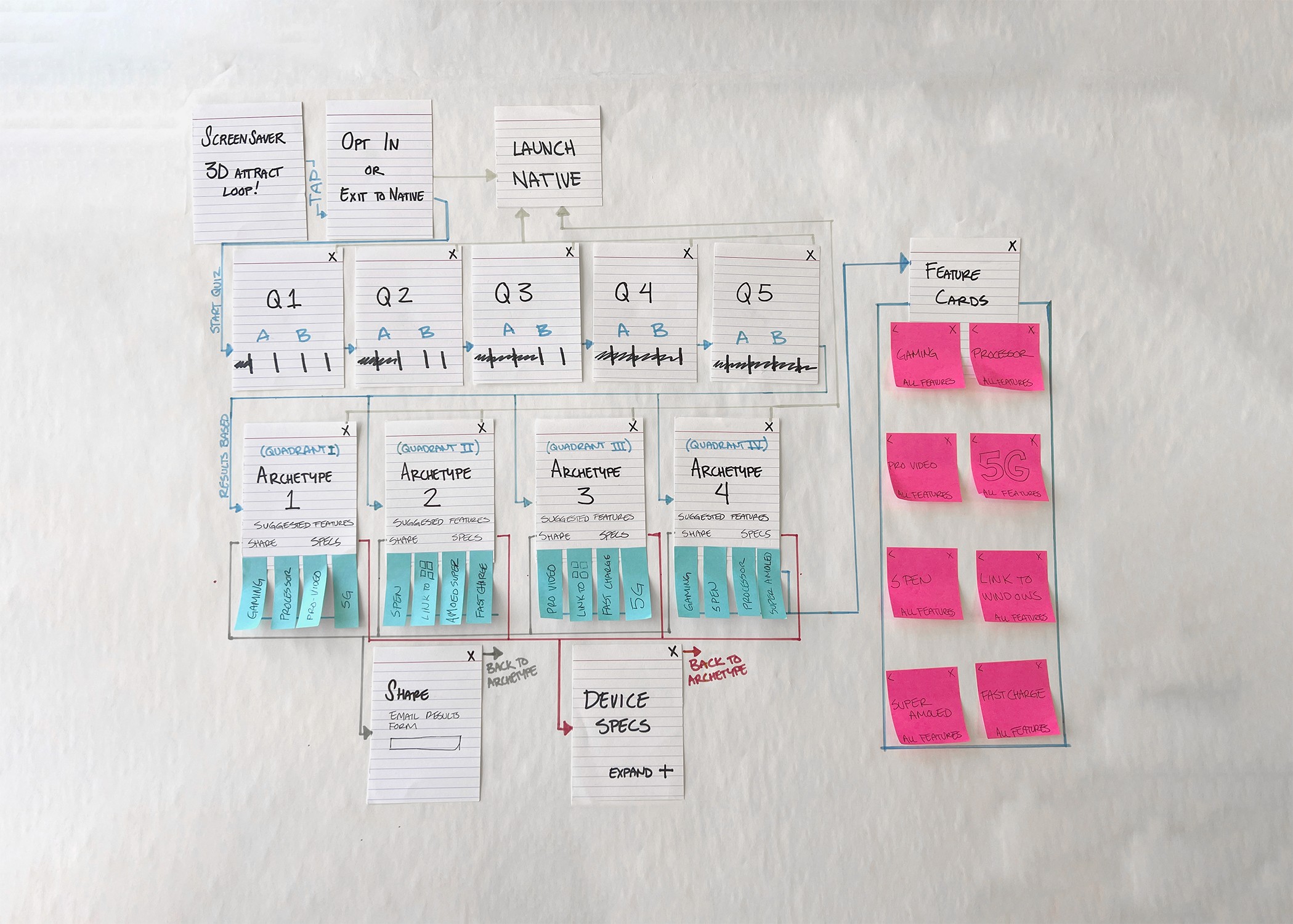
The central mechanic was a short, engaging quiz designed to feel more like play than survey. Six questions. Binary choices. Thirty seconds to complete.
The quiz logic maps users across two behavioral axes:
Analytical vs. Creative and Introverted vs. Extroverted.
Three questions determine each axis, interleaved so the pattern isn't obvious. The majority response on each axis determines the dominant trait, and the combination of the two places the user into one of four quadrants.
The format was deliberately lightweight. In a retail environment, attention is the scarcest resource. A six-question A/B quiz asks almost nothing of the user but returns something that feels genuinely personal.


ARCHETYPE
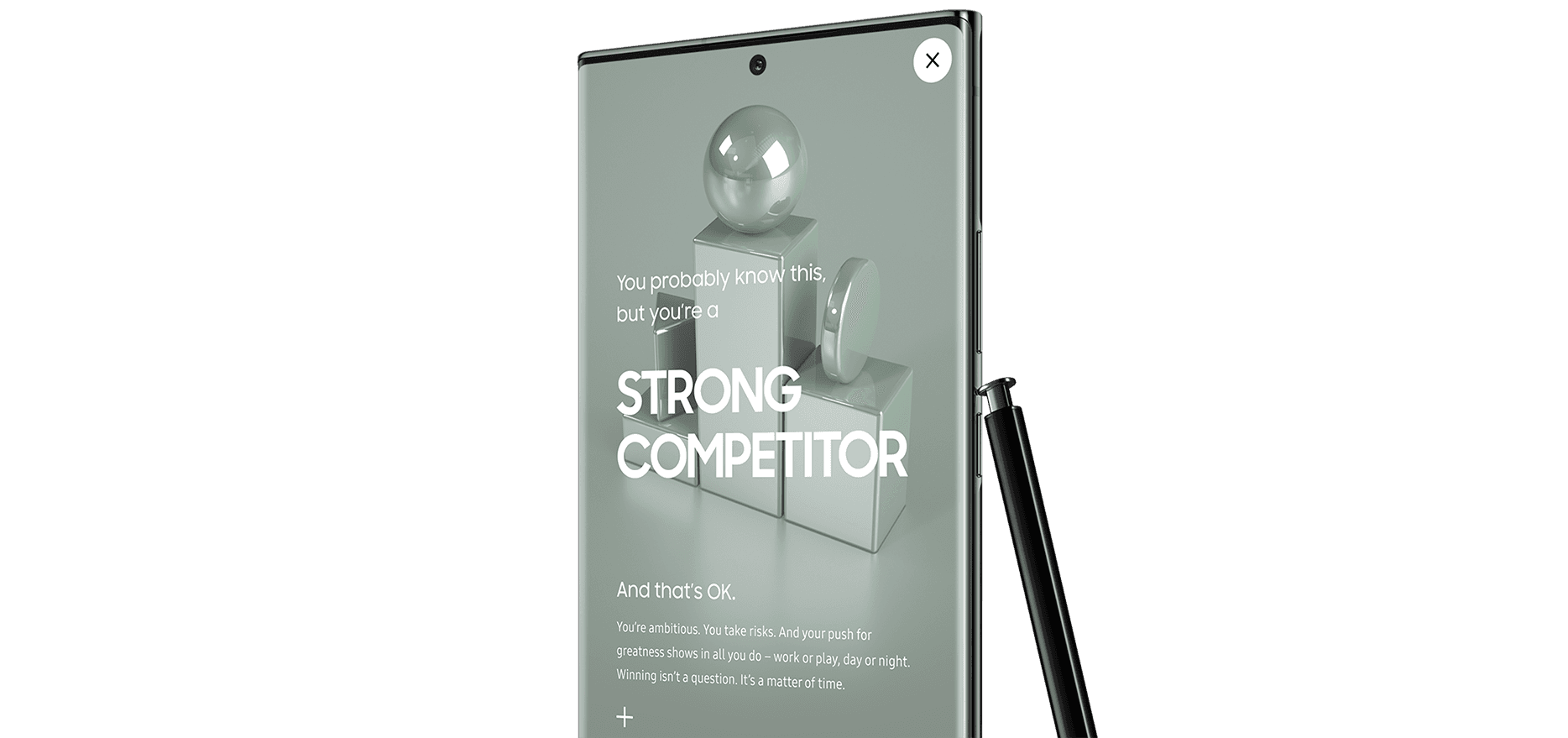
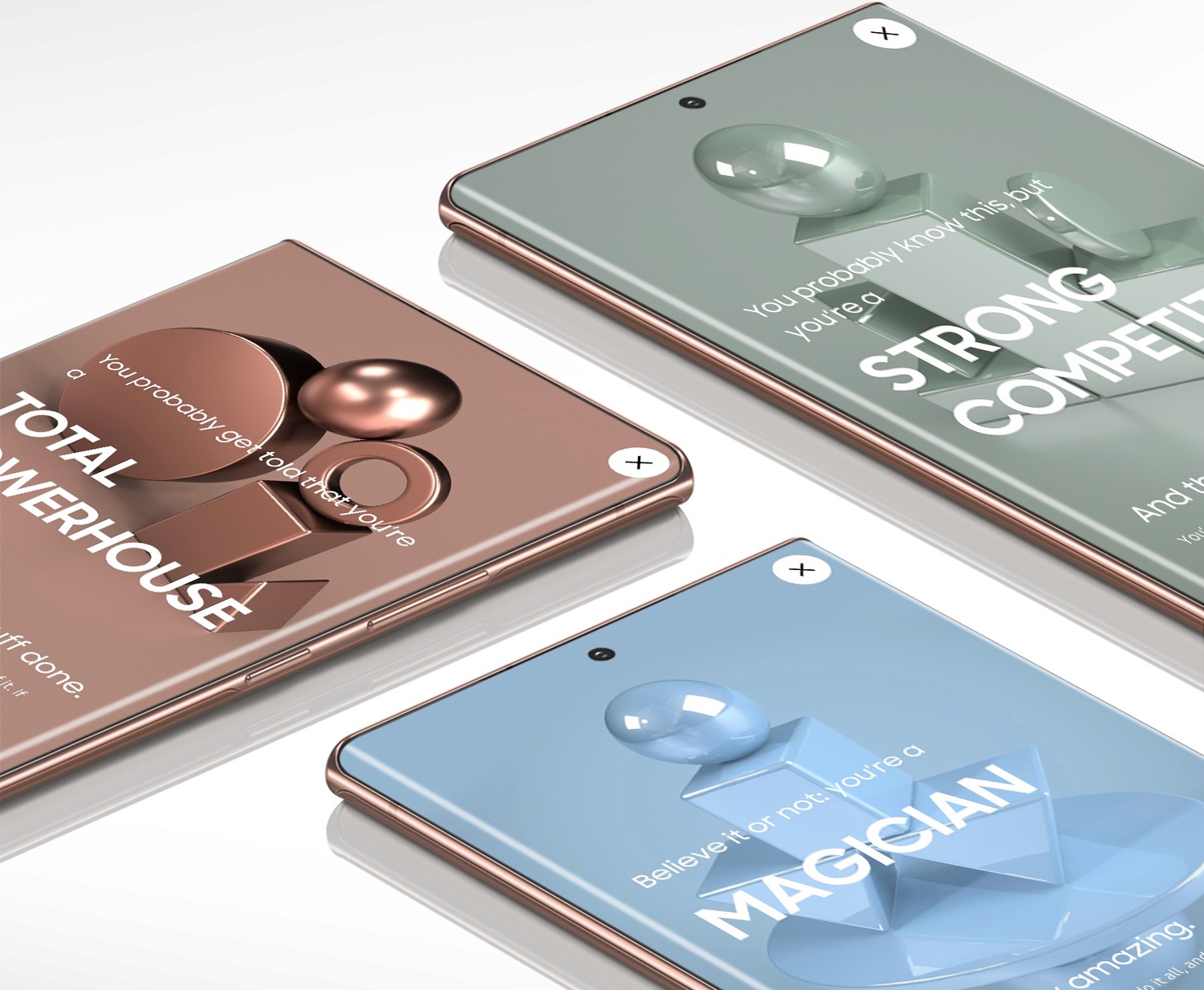
Each combination of axis results places the user into one of four archetypes with its own name, personality, color palette, 3D visual identity, and curated set of device features.
The 3D sculptures were designed and rendered specifically for each archetype, using the Galaxy Note 10's own device colors and material finishes as the palette. Every detail from the weight of the forms, to the reflectivity of the surfaces, to the arrangement of the shapes, was designed to feel like a physical expression of that personality type
Each archetype screen surfaces four curated feature thumbnails with the highest-priority recommendations for that user plus a "See all features" option for those who want to go deeper. A "Feeling different?" section at the bottom invites users to explore any of the other archetypes freely. The experience is a suggestion, not a prescription.



Tap a feature, launch it live. Every feature recommendation is one tap from the real thing.
ATTRACTOR LOOP
Before a user ever takes the quiz, the device has to earn their attention. The attractor loop is a motion piece that runs continuously on the demo device when it's not in use serving two functions.
The first is practical. A static image on a display screen will eventually cause burn-in. A moving attractor loop keeps the pixels cycling and extends the life of the hardware.
The second is strategic. In a busy retail environment, motion stops people. The attractor loop was designed as a visual hook that catches the eye of someone walking past and pulls them in.
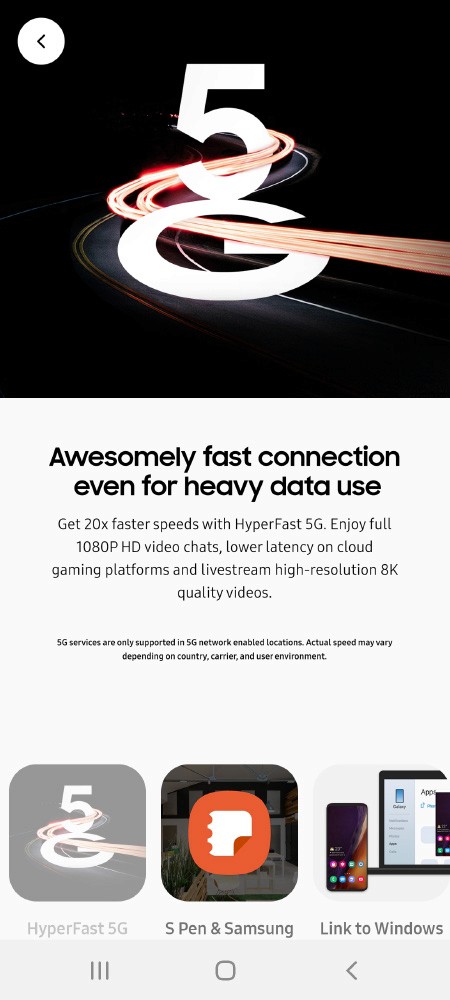
The creative direction used the Galaxy Note 10's device colors and material textures, translating the phone's physical design language into abstract 3D forms in motion. Scene by scene, the loop alludes to the device's most prominent features without ever showing a spec sheet. It feels like the phone before you've ever picked it up.


USABILITY

Jack S.
"I knew exactly what to tap at every step. Nothing felt hidden."

Jason M.
"The Strong Competitor result was so accurate it was almost unsettling."

Claire J.
"I love horoscopes and I felt like the phone was actually talking to me."


Emma T.
"The buttons were a little hard to find at first. Once I got going it clicked."

Max R.
"The exit button made me trust it more but I never actually used it."

Eva L.
"Six questions felt like the right amount. Any more and I would have stopped."
Usability
Accessibility
Whether you align with your archetype or want to explore the others, every user has the opportunity to uncover the personality that feels right.


The Galaxy Note 10 retail experience was localized for over 60 countries and launched globally across thousands of Samsung flagship retail locations.
The quiz mechanic, the archetype framework, and the underlying personalization logic proved flexible enough that the system was subsequently skinned and deployed across Samsung's A-series and Fold device lineup, extending the reach of the framework well beyond the original brief.
More than
250K Installs
Localized for
60+ Countries
Educating over
10M Consumers